Experto en condensadores de electrones de antorcha
Buscar
Hogar

Buscar

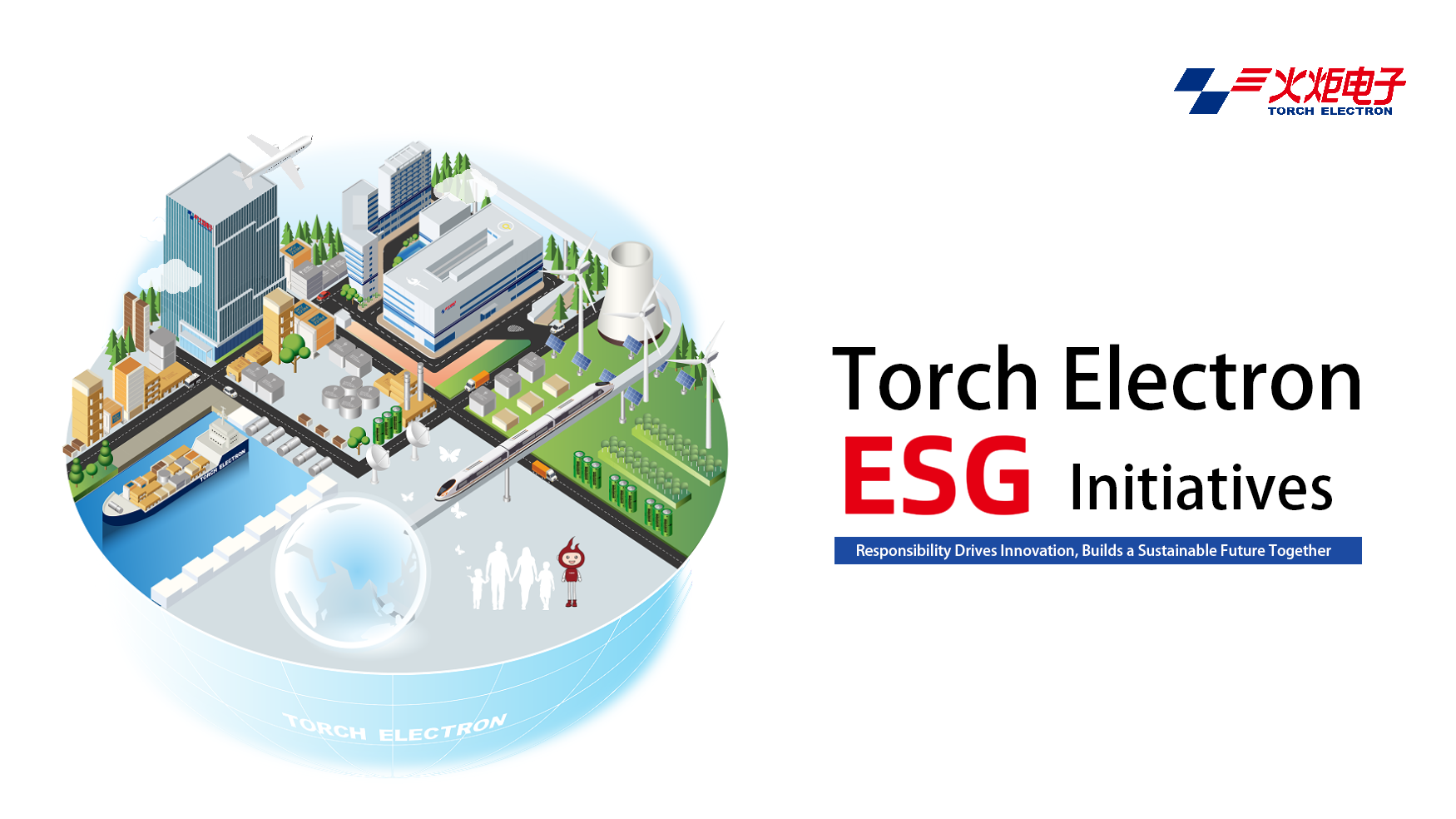
  • Iniciativas ESG de Torch Electron: Innovación impulsada por la responsabilidad para un futuro sostenible
    May 19, 2025
    ESG, siglas de Ambiental, Social y Gobernanza, es un concepto de gestión e inversión corporativa propuesto formalmente por las Naciones Unidas en 2004. Sirve no solo como estándar para medir el valor a largo plazo de las empresas, sino también como marco rector para promover el desarrollo coordinado de la economía, la sociedad y el medio ambiente. En Torch Electron, colocamos los criterios ESG en el centro de nuestra estrategia, alineando la responsabilidad con la innovación para construir un futuro más resiliente. 1. Impulsamos el desarrollo verde a través de la innovación tecnológica: La Fase I de nuestro sistema de generación de energía fotovoltaica tiene una capacidad instalada total de 561,2 kW, con una capacidad de almacenamiento de energía de 1440 kW/2700 kWh, lo que permite un uso energético altamente eficiente. Implementamos una gestión completa de la huella de carbono durante todo el ciclo de vida de nuestro producto estrella, los condensadores cerámicos multicapa de chip, lo que contribuye a los objetivos de "Carbono Dual". Torch Electron y cuatro filiales han obtenido la Certificación del Sistema de Gestión Ambiental ISO 14001. Las filiales Liya Advanced Materials y Liya Chemical han sido certificadas como Fábricas Verdes Nacionales. Nuestras inversiones en protección ambiental superan los 6,2 millones de RMB, logrando un cumplimiento del 100 % en materia de control de residuos, emisiones y ruido, sin ninguna penalización ambiental. 2. Creemos que el talento es la base del desarrollo sostenible: Al cierre de 2024, contábamos con 2.174 colaboradores; realizamos 765 capacitaciones con 19.000 participantes y 74 promociones. Nuestra empresa matriz recibió el título de "Empresa Saludable Municipal de Quanzhou" y obtuvo el Certificado de Normalización de Seguridad en el Trabajo de Tercer Nivel, con 6,95 millones de RMB invertidos en salud ocupacional, logrando cero enfermedades ocupacionales y una cobertura de chequeo de salud del 100%. Se donaron 3,426 millones de RMB para apoyar la revitalización educativa y el desarrollo comunitario. Se implementó un control de calidad integral durante todo el ciclo de vida y se estableció un sistema de servicio preventa, durante la venta y posventa para mejorar la satisfacción del cliente. Se fortaleció la gestión de la cadena de suministro, colaborando con socios para impulsar el progreso del sector. 3. La gobernanza tecnológica y de cumplimiento respaldan un crecimiento de alta calidad: 678 patentes consolidan nuestro liderazgo tecnológico. Los logros en la fabricación inteligente incluyen: El proyecto "Construcción de gráficos de conocimiento de la microestructura y el macrorendimiento de condensadores cerámicos basados ​​en big data e IA" fue seleccionado como un caso de referencia de aplicación de IA de la provincia de Fujian en 2024. "Torch Electron Smart Manufacturing Factory" fue reconocida como Fábrica de Demostración de Fabricación Inteligente Provincial de Fujian 2024 y figura en el "Directorio Nacional de Fábricas 5G 2024". Se estableció un sistema de protección de ciberseguridad de triple capa, garantizando cero filtraciones de datos y salvaguardando la confianza del cliente. Se creó una estructura de gobernanza de tres niveles (Consejo de Administración, Comité de Estrategia y ESG del Consejo, y Equipo de Ejecución ESG) para garantizar una toma de decisiones científica y transparente. Los criterios ESG no son el fin, sino el principio y nuestra promesa para el futuro. Unamos fuerzas para impulsar la innovación con responsabilidad e iluminar un futuro sostenible con tecnología. Creemos firmemente que el éxito empresarial debe ir de la mano de la responsabilidad.
    LEER MÁS
  • ¿Cómo definen IATF 16949 y AEC-Q la calidad de los componentes electrónicos automotrices?
    Aug 13, 2025
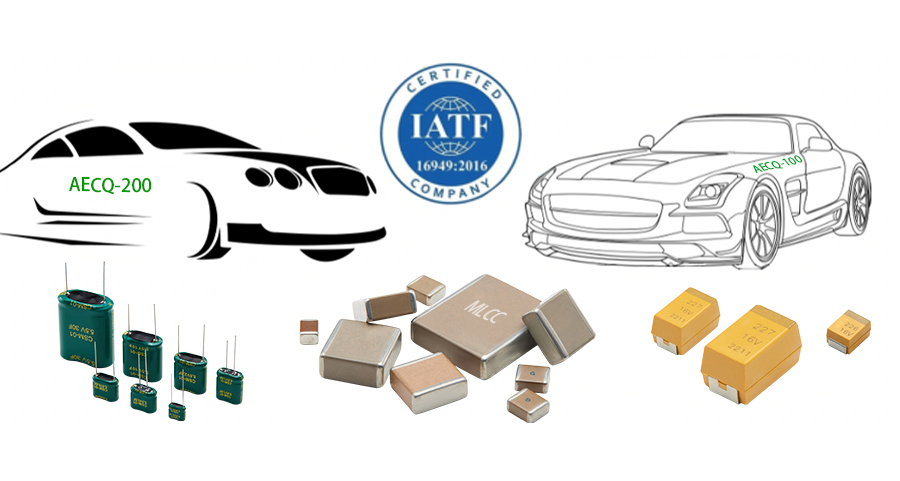
    En la industria de la electrónica automotriz, calidad y fiabilidad son fundamentales para la seguridad, el rendimiento y la durabilidad a largo plazo. Fabricantes y proveedores de componentes esenciales como MLCC automotrices (Condensadores cerámicos multicapa)Los condensadores de tantalio y los supercondensadores deben cumplir con rigurosas normas internacionales. Entre las más reconocidas se encuentran la IATF 16949 y la AEC-Q, que definen cómo se fabrican los productos y cómo se certifican para su uso en vehículos. ¿Qué es IATF 16949? IATF 16949 Es una norma global para sistemas de gestión de calidad automotriz, desarrollada por el Grupo de Trabajo Internacional sobre Automoción (IATF) en colaboración con ISO. Combina los requisitos generales de la ISO 9001 con medidas de calidad adicionales específicas para la industria automotriz. Para proveedores de componentes electrónicos de grado automotriz, desde MLCC automotrices en las unidades de control del motor a condensadores de tantalio En sistemas de infoentretenimiento, la certificación IATF 16949 demuestra la capacidad constante para satisfacer los requisitos del cliente, prevenir defectos y minimizar las variaciones de fabricación. Garantiza que los procesos de producción de condensadores y otros componentes sean controlados, eficientes y fiables. ¿Qué es AEC-Q? AEC-Q Las normas, creadas por el Consejo de Electrónica Automotriz (AEC), definen los requisitos de las pruebas de fiabilidad para los componentes electrónicos automotrices. A diferencia de la IATF 16949, que se centra en los procesos de fabricación, la AEC-Q se centra en la cualificación a nivel de componente. Por ejemplo: AEC-Q200 Se aplica a componentes pasivos como los de automoción. MLCC, condensadores de tantalio, y supercondensadores, verificando su capacidad para soportar ciclos de temperatura, humedad, vibraciones y estrés eléctrico. AEC-Q100 Se aplica a los semiconductores, garantizando que funcionen de manera confiable en entornos automotrices exigentes. Cuando un componente cumple con los requisitos AEC-Q, ha sido probado para soportar las duras realidades del entorno automotriz, desde temperaturas extremas en el compartimiento del motor hasta las altas cargas eléctricas en el sistema de propulsión de un vehículo eléctrico. La diferencia entre IATF 16949 y AEC-Q Si bien ambos son fundamentales para la cadena de suministro de electrónica automotriz, cumplen diferentes propósitos: IATF 16949 Es una certificación basada en procesos que garantiza que una empresa puede fabricar constantemente condensadores y otros componentes de alta calidad. AEC-Q es una calificación a nivel de producto que garantiza que esos condensadores y componentes puedan sobrevivir a las condiciones automotrices del mundo real. En términos simples, IATF 16949 garantiza que su fábrica pueda producir productos excelentes. MLCC automotrices, condensadores de tantalio, y supercondensadores en todo momento, mientras que AEC-Q se asegura de que esos componentes puedan funcionar de manera confiable en vehículos reales. Objetivo principal de IATF 16949 y AEC-Q El objetivo final de ambas normas es garantizar que los componentes automotrices sean seguros, confiables y cumplan con las expectativas del cliente. IATF 16949 Se centra en la mejora continua de los procesos de fabricación, la prevención de defectos y la eficiencia en la cadena de suministro automotriz global. AEC-Q garantiza que cada persona cualificada MLCC automotriz, condensador de tantalio, o supercondensador Puede funcionar de forma fiable durante toda la vida útil del vehículo, incluso en condiciones ambientales y eléctricas extremas. Para proveedores globales de electrónica automotriz como Antorcha electrónicaEl cumplimiento de IATF 16949 y AEC-Q no es solo una certificación, es un compromiso de brindar un servicio confiable. MLCC automotrices, condensadores de tantalio, y supercondensadores que cumplen con los más altos estándares automotrices a nivel mundial.
    LEER MÁS
  • Por qué los condensadores de película se están convirtiendo en un motor de crecimiento estratégico para Torch Electron
    Dec 29, 2025
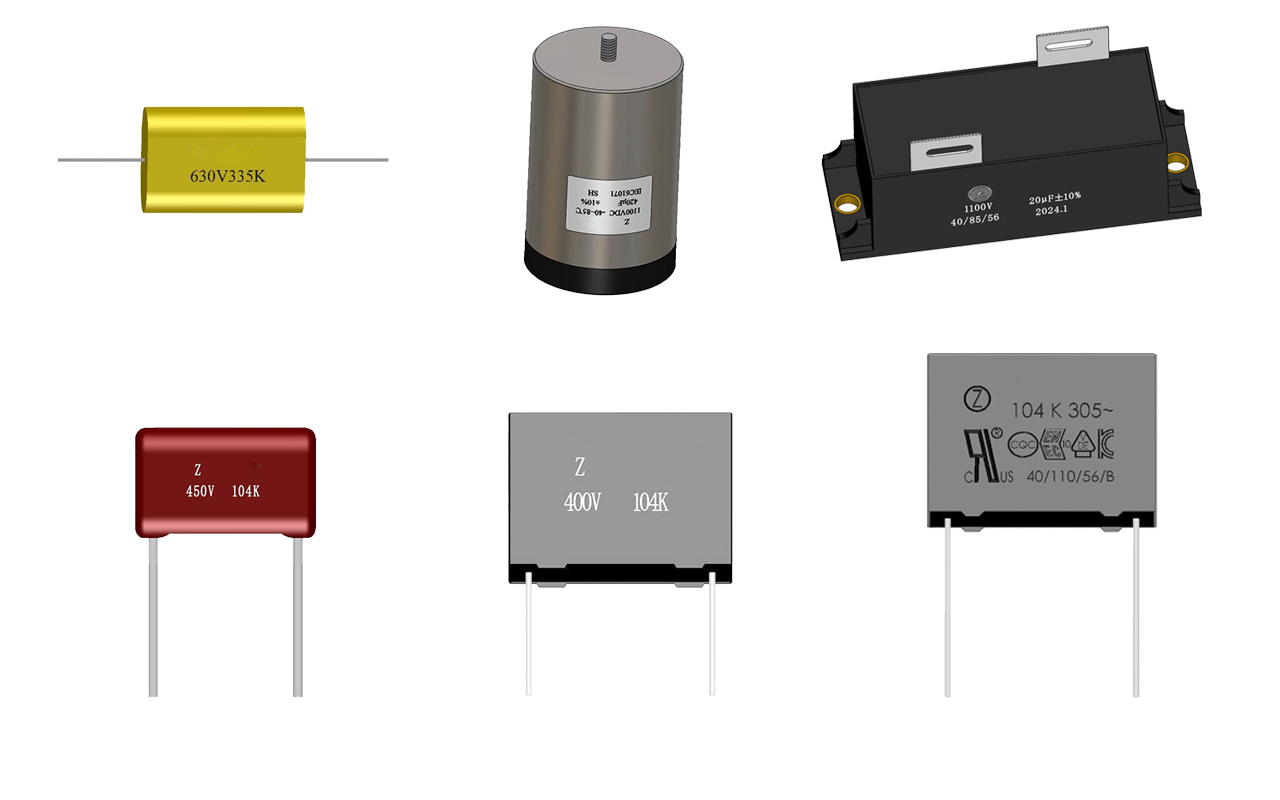
    (Condensadores de película que permiten un funcionamiento estable en sistemas de energía eólica)Los condensadores de película desempeñan un papel fundamental en los sistemas electrónicos y de potencia modernos, ya que facilitan un funcionamiento estable y eficiente en nuevas energías, automatización industrial, almacenamiento de energía y electrónica automotriz. Su estabilidad eléctrica, larga vida útil y resiliencia ambiental los hacen indispensables en aplicaciones de alta confiabilidad. A medida que se acelera la electrificación global y la transformación energética, la demanda de condensadores de película de alto rendimiento sigue creciendo. Al mismo tiempo, la localización de la cadena de suministro y la integración vertical cobran cada vez mayor importancia, en particular para componentes electrónicos esenciales con altas barreras técnicas.(Campus de fabricación de Torch Electron)Torch Electron ha identificado los condensadores de película como un enfoque estratégico dentro de su amplia cartera de componentes. Al invertir en ciencia de materiales, ingeniería de fiabilidad y fabricación avanzada, la empresa construye una base más resiliente y escalable para impulsar el crecimiento a largo plazo.(Soluciones de condensadores de película de alta confiabilidad)La integración de Zhongxing Electronics refuerza aún más esta estrategia. Con casi tres décadas de experiencia especializada y capacidades propias de producción de películas metalizadas, Zhongxing Electronics mejora la capacidad de Torch Electron para innovar con mayor rapidez, garantizar la estabilidad del suministro y responder a las necesidades específicas de los clientes en los mercados globales.(Torch Electron y Zhongxing Electronics – integración estratégica)Mirando hacia el futuro, Antorcha electrónica cree que la inversión sostenida en componentes centrales, como los condensadores de película, será un impulsor clave de la competitividad, la creación de valor y el crecimiento a largo plazo.
    LEER MÁS
  • Microwave Ceramic Chip Capacitors: Supporting the Development of High-Frequency Electronic Systems
    Jul 22, 2026
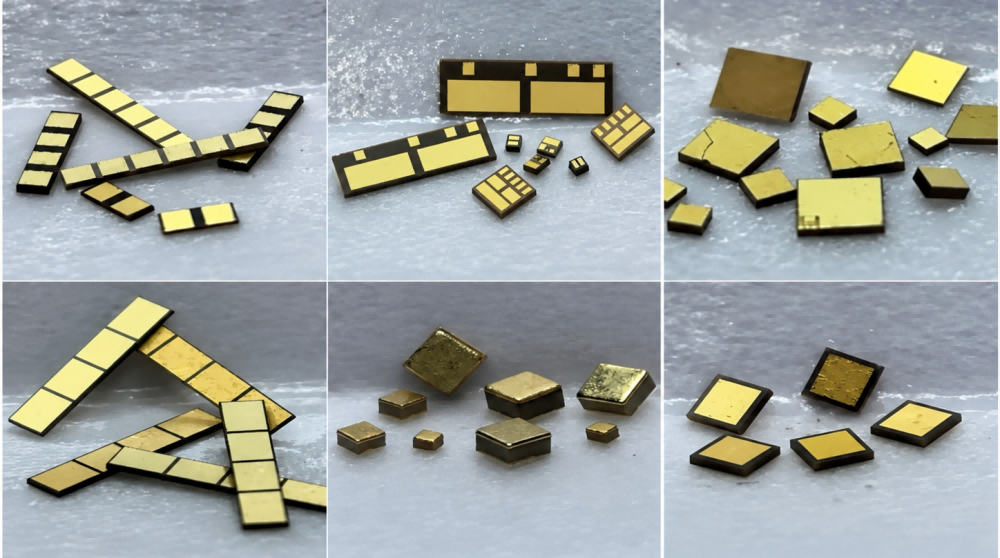
    The rapid development of wireless communication, radar systems, and advanced electronic equipment is driving increasing demand for high-performance RF and microwave components. In high-frequency applications, electronic components need to provide stable performance, reliability, and efficient signal transmission to support increasingly complex system requirements.无线通信、雷达系统和先进电子设备的快速发展推动了对高性能射频和微波组件需求的不断增长。在高频应用中,电子元件需要提供稳定的性能、可靠性和高效的信号传输,以支持日益复杂的系统需求。     Microwave Ceramic Chip Capacitors play an important role in modern high-frequency circuits. With excellent microwave characteristics and reliable electrical performance, these components are widely used in microwave integrated circuits (MICs), RF systems, and other applications requiring high-frequency stability.微波陶瓷芯片电容在现代高频电路中扮演着重要角色。凭借优异的微波特性和可靠的电气性能,这些元件广泛应用于微波集成电路(MIC)、射频系统及其他需要高频稳定性的应用。 As electronic systems continue to evolve toward higher integration and smaller form factors, the importance of reliable high-frequency passive components continues to grow. Microwave ceramic chip capacitors support critical circuit functions such as DC blocking, RF bypass, source bypass, and impedance matching, helping engineers achieve stable and efficient circuit designs.随着电子系统不断向更高集成度和更小的形态设计发展,可靠的高频无源元件的重要性也在不断提升。微波陶瓷芯片电容支持直流阻断、射频旁路、源旁路和阻抗匹配等关键电路功能,帮助工程师实现稳定高效的电路设计。   With advantages including compact structure, reliable performance, and suitability for advanced electronic assembly, microwave ceramic chip capacitors from Aurora Technologies support applications across microwave integrated circuits, RF systems, and other high-frequency electronic fields.凭借结构紧凑、性能可靠及适合先进电子组装等优势,Aurora Technologies的微波陶瓷芯片电容支持微波集成电路、射频系统及其他高频电子领域的应用。   As communication technologies, intelligent systems, and advanced electronic applications continue to develop, the demand for reliable microwave components will continue to increase. Looking ahead, Torch Electron believes that continued investment in core electronic components such as microwave ceramic chip capacitors will be an important driver of technological innovation, competitiveness, and long-term growth.随着通信技术、智能系统和先进电子应用的不断发展,对可靠微波元件的需求将持续增长。展望未来,Torch Electron认为,持续投资于微波陶瓷芯片电容器等核心电子元件将成为技术创新、竞争力和长期增长的重要驱动力。     Through continuous development in electronic component technologies, Torch Electron remains committed to providing high-performance solutions and supporting customers in the evolving global electronics market.通过电子元件技术的持续发展,Torch Electron始终致力于提供高性能解决方案,支持不断发展的全球电子市场中的客户。    
    LEER MÁS
  • AI Computing Demand Continues to Rise, Driving a New Round of MLCC Capacity Expansion
    Sep 21, 2026
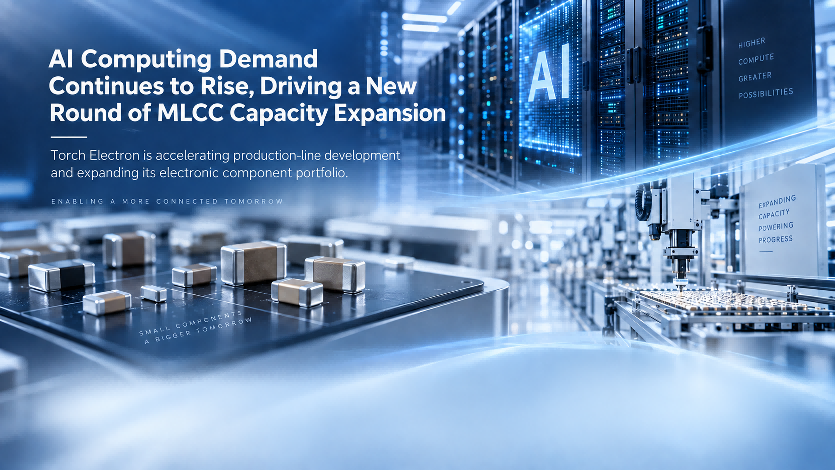
    Multilayer ceramic capacitors (MLCCs) are core passive components widely used in electronic circuits for filtering, voltage stabilization, energy storage, and decoupling. They are often referred to as the “industrial rice” of the electronics industry because of their broad and essential use.   Since the second half of 2025, major passive components including MLCCs, resistors, and inductors have entered a new round of price adjustments, with increases generally ranging from 5% to 30%.   In 2026, this trend expanded further. According to publicly available market information, Samsung Electro-Mechanics raised shipment prices across certain product lines by around 30%; Murata Manufacturing saw cumulative increases of approximately 15% to 40% on selected products; Yageo raised official quotations by around 50%; and other major manufacturers such as Taiyo Yuden also followed with price adjustments.   In addition to price changes, lead times for some high-end, high-capacitance MLCCs have also extended significantly. What was previously a typical lead time of around eight weeks has, for some specifications, stretched to 20 weeks or even more than half a year.   Rising prices, longer lead times, and tighter high-end capacity all point to a more structural shift in MLCC supply and demand.   AI Infrastructure Is Becoming a Major Driver of MLCC Demand   One of the key factors behind this change is the rapid expansion of AI infrastructure and computing demand.   Compared with conventional general-purpose servers, AI servers and high-density computing racks operate at much higher power and computing densities, while also facing greater transient current fluctuations and electromagnetic interference.   GPUs, high-bandwidth memory (HBM), and high-speed communication chips need to operate continuously under low-voltage, high-current conditions. This requires a large number of high-performance MLCCs with characteristics such as high capacitance, high-temperature capability, and low equivalent series resistance (ESR) to be placed close to the chips.   In other words, rising computing density is increasing not only the number of MLCCs required, but also the performance requirements placed on them.   A conventional general-purpose server typically uses around 2,200 to 4,000 MLCCs, while an AI server may use more than three times that number.   At the rack level, the increase is even more significant.   For example, NVIDIA’s GB300 NVL72 rack is estimated to use around 440,000 MLCCs, significantly increasing the MLCC value per rack.   Future Rubin NVL72 platforms are expected to require even more, with MLCC usage potentially reaching around 570,000 units per rack and the corresponding MLCC value increasing by approximately 166%.   A similar trend can be seen at the accelerator board level.   For AMD’s MI450 platform, the number of certain MLCC specifications used on a single board reportedly increased from around 1,440 units in the previous generation to 10,544 units, representing an increase of approximately 632%.   These figures show that as AI computing platforms continue to move toward higher computing density, MLCCs are becoming one of the passive component categories seeing particularly strong demand growth.   Demand for High-Capacitance MLCCs Is Also Expanding Rapidly   The impact of AI servers is not limited to higher MLCC unit counts.   As GPU and computing-chip power consumption continues to increase, systems must handle more severe transient load changes, which is driving stronger demand for high-capacitance MLCCs.   In particular, more high-capacitance, low-ESR MLCCs need to be placed close to chips and power nodes to improve power stability and transient response.   At the specification level, demand for MLCCs rated at 47μF and above in cloud AI applications is expected to rise from around 4 billion units in 2025 to more than 40 billion units in 2027.   This means future AI-related MLCC demand will continue to move toward: High capacitance | Smaller size | Higher temperature capability | Lower ESR | Higher performance   The Global MLCC Market Is Expected to Continue Expanding   As investment in AI servers, data centers, and high-performance computing infrastructure continues, the global MLCC market is expected to enter a new stage of growth.   Industry forecasts suggest that global MLCC shipment value could increase from approximately USD 14.67 billion in 2025 to around USD 44.45 billion by 2031, representing a compound annual growth rate (CAGR) of approximately 20.3%.   At the same time, the high-end AI MLCC market remains highly concentrated.   According to relevant market data, Murata Manufacturing and Samsung Electro-Mechanics together account for around 85% of the global high-end AI MLCC market.   As AI server orders continue to grow, leading overseas manufacturers may prioritize more production capacity for higher-margin, higher-value AI-related products.   This shift in capacity allocation could also affect other application markets.   As more manufacturing resources move toward high-end AI MLCCs, some general-purpose and mid-to-high-end products used in consumer electronics, industrial control, and other sectors may face a certain degree of capacity crowding-out.   Therefore, the current price increases and lead-time extensions in the passive component market reflect more than simple short-term fluctuations. They also involve the reallocation of production capacity toward high-end products, changes in product mix, and shifts in the global supply structure.   For domestic component manufacturers, these structural changes may also create new market opportunities, including the ability to absorb part of the overflow demand and accelerate the localization of higher-end products.   Torch Electron Continues to Accelerate Production-Line Development and Capacity Expansion   As demand for MLCCs and other electronic components continues to grow and product requirements continue to evolve, Torch Electron is also accelerating production-line development and capacity expansion to further strengthen its manufacturing and supply capabilities.   Since 1989, Torch Electron has remained focused on the electronic component industry and has continued to expand its product portfolio while strengthening production capability in preparation for future market growth.   Beyond MLCCs, Torch Electron and its related businesses have developed a product portfolio covering multiple categories of electronic components.     Our main product categories currently include:   MLCC MLCC is one of Torch Electron’s core product categories. We provide ceramic capacitor products for different voltage, capacitance, size, and application requirements.   Tantalum Capacitors Torch Electron offers a range of tantalum capacitor products to support different voltage, capacitance, and structural requirements.   Supercapacitors Our supercapacitor portfolio mainly includes supercapacitor cells and supercapacitor modules, which can be used in energy storage, rapid charge and discharge, power compensation, and other related applications.   Resistors & Temperature Compensated Attenuators Torch Electron also offers chip resistors and temperature compensated attenuators for resistance control, signal attenuation, and temperature compensation in different electronic systems.   Microwave & EMI Solutions In high-frequency and electromagnetic compatibility applications, Torch Electron provides microwave and EMI-related products and solutions for communications, high-frequency electronics, power systems, and other applications.   Power Devices Our product portfolio also includes power devices, further extending our offering from passive components to power electronics.   Preparing for the Next Stage of Electronic Component Demand   The development of AI infrastructure is driving MLCC demand from simple volume growth toward simultaneous growth in quantity, specifications, and performance requirements.   At the same time, industrial control, power electronics, new energy, communications, transportation, and other electronic applications continue to drive demand for tantalum capacitors, supercapacitors, resistors, temperature compensated attenuators, microwave and EMI products, and power devices.   In response to these market changes, Torch Electron will continue to accelerate production-line development and capacity expansion while further strengthening its product portfolio and manufacturing capabilities to support the evolving needs of the global electronics industry.
    LEER MÁS
dejar un mensaje

dejar un mensaje
Si está interesado en nuestros productos y desea conocer más detalles, deje un mensaje aquí, le responderemos lo antes posible.
entregar

Hogar

Productos

contacto